
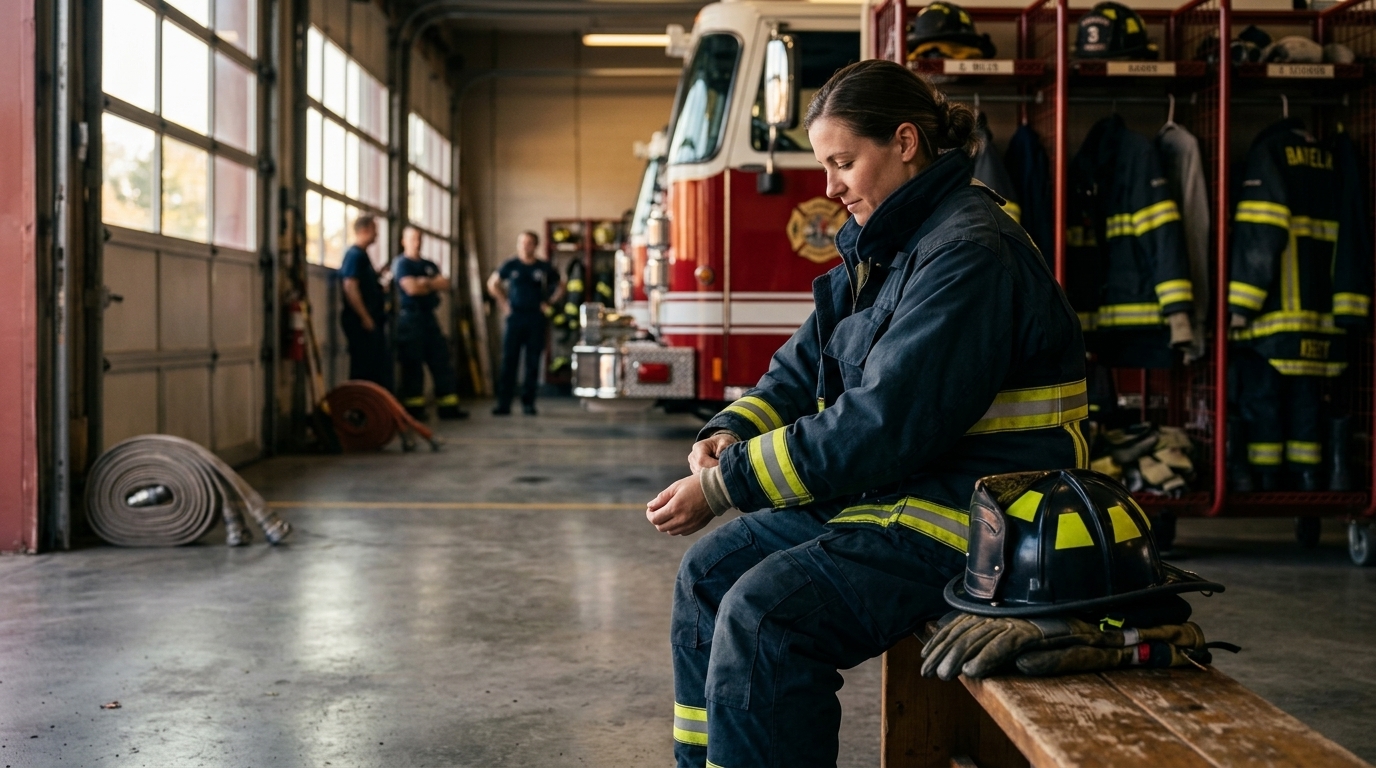
Getting custom-sized firefighting personal protective equipment (PPE) does not have to be a drawn-out ordeal. With the right preparation, accurate measurements, and a clear understanding of NFPA standards, your department can receive properly fitted turnout gear within an 8-to-12-week turnaround. Custom-sized PPE is gear manufactured to an individual firefighter's specific body measurements rather than pulled from standard stock sizes. This guide walks you through every step of the process, from initial needs assessment to final delivery, so you can keep your crew protected without unnecessary delays.
Why Custom-Sized PPE Matters
Ill-fitting turnout gear is more than an inconvenience. According to PPE101, PPE fit is such an important aspect of performance that it is included as part of NFPA 1971. Gear that is too loose creates snag hazards, while gear that is too tight restricts range of motion and accelerates fatigue.
Properly fitted PPE also addresses a growing need for inclusivity. Female firefighters frequently encounter challenges with sleeve length, waist-to-hip ratio, and boot sizing when issued stock gear. Custom sizing ensures every member of your crew receives protection engineered for their body, not a generic average.
Protection and Performance
NFPA regulations require at least a two-inch overlap between the coat and pants. When gear is custom-built, manufacturers can guarantee this overlap across all movement positions, reducing thermal exposure gaps on the fireground.
Long-Term Cost Savings
Gear that fits correctly from day one experiences less stress at seam points and reinforcement areas, extending its usable service life toward the full 10-year retirement window outlined in NFPA 1851.
Understanding NFPA Standards for Custom Gear
NFPA 1971 is the Standard on Protective Ensembles for Structural Fire Fighting and Proximity Fire Fighting. It defines minimum design, performance, testing, and certification requirements for turnout coats, pants, coveralls, and interface components. Any custom gear you order must carry a permanent certification label from a recognized lab such as UL or SEI.
The fire service is also transitioning toward NFPA 1970, a consolidated standard that brings turnout gear, SCBA, station uniforms, and PASS devices under one document. For 2025 and 2026 purchases, confirm that your manufacturer certifies to the current edition.
Key Performance Metrics
| Metric | What It Measures | NFPA 1971 Minimum |
|---|---|---|
| TPP (Thermal Protective Performance) | Time to second-degree burn under combined heat | 35 |
| THL (Total Heat Loss) | Ability to release body heat | 205 W/m² |
| CCHR (Compressive Conductive Heat Resistance) | Protection at knees and shoulders under compression | 25 seconds |
| RPP (Radiant Protective Performance) | Protection from radiant heat exposure | 20 |
Step 1: Accurate Measurement and Sizing
Measurement is the single most important step in the custom PPE process. As noted by Fire Apparatus Magazine, with advance scheduling most departments can size their crews in just a day or two. Each firefighter should be measured over a base uniform layer, not street clothes.
Essential Measurements
- Chest: Around the fullest part of the bust, below the arms, arms at rest.
- Sleeve length: From mid-back vertebrae, over the shoulder, to the thumb crotch.
- Waist: At the point where pants will be worn, plus 4 inches for turnout allowance.
- Inseam: From crotch to the desired pant break point.
- Boot size: Use a Brannock Device for accuracy rather than self-reported shoe size.
Explore firefighting equipment and tools at Chief Miller Apparel to complement your ensemble with certified gloves, hoods, and helmets.
Step 2: Build Your Specification Sheet
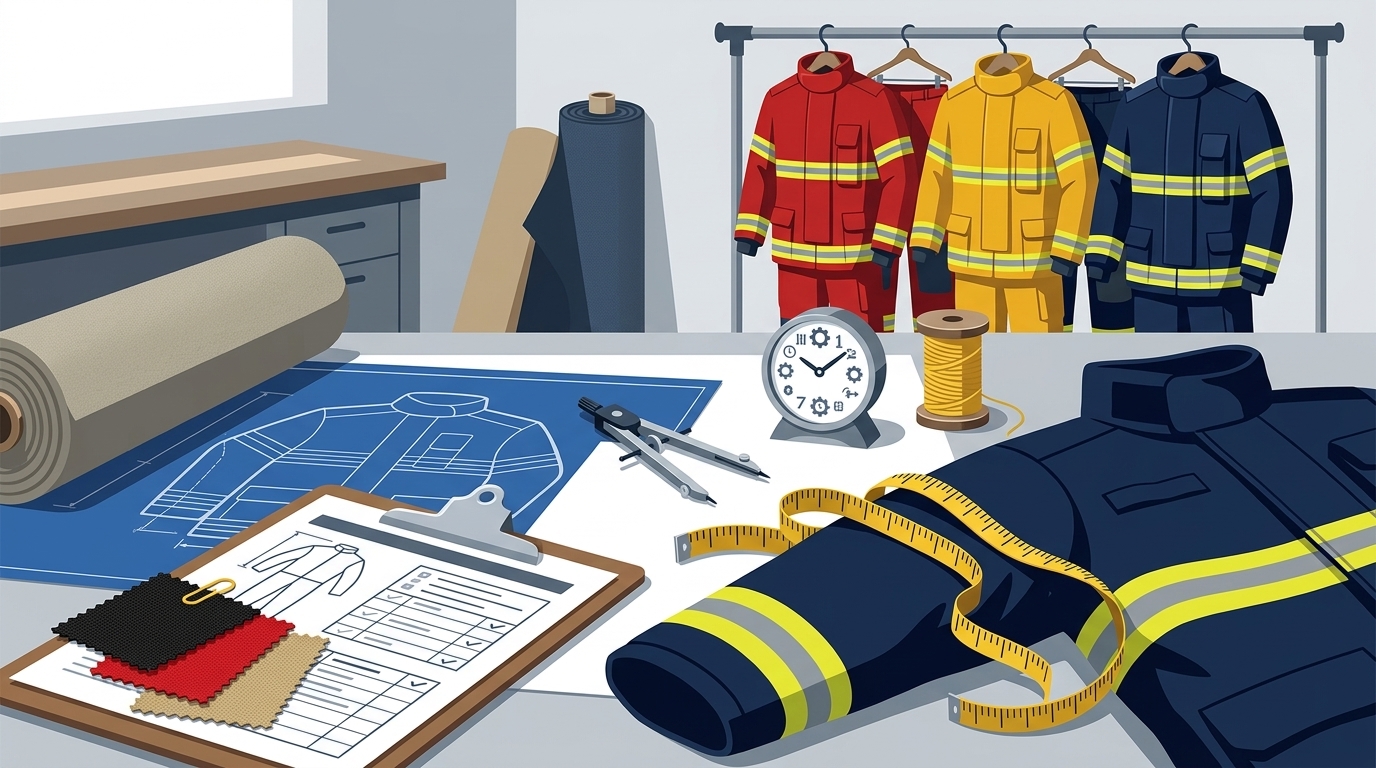
A specification sheet is a document that details every material, feature, and customization your department requires. It should include the outer shell fabric, moisture barrier type, thermal liner selection, trim color and placement, pocket configuration, and lettering. Custom options like reinforced knees, drag-rescue devices, and radio pockets should be listed explicitly.
When building specs, balance TPP against THL. A thicker composite offers higher thermal protection but lower heat dissipation. Departments in hotter climates may benefit from prioritizing THL to reduce heat stress, which remains the leading cause of on-duty firefighter fatalities.
For departments exploring PFAS-free moisture barriers, note that several material suppliers have transitioned fabrics to non-PFAS versions in response to evolving regulations. Include this requirement in your RFP if it is a departmental priority.
Step 3: Choose the Right Vendor
Selecting a vendor with firefighting expertise dramatically reduces turnaround risk. Chief Miller Apparel is a firefighter-owned company with knowledgeable staff ready to discuss your requirements. Their team brings decades of combined firefighting knowledge to every interaction, ensuring that product recommendations match real-world operational needs.
When evaluating any vendor, confirm these items before signing a purchase order:
- Manufacturer is certified to current NFPA 1971 (or NFPA 1970) edition.
- Custom lead time is quoted in writing, typically 8 to 12 weeks for made-to-measure orders.
- Wear-trial samples are available for fit validation before full production.
- Post-purchase support includes inspection guidance and NFPA 1851 compliance resources.
Browse the full range of new safety gear arrivals or explore turnout gear bags to keep your new PPE protected from UV and contamination.
Typical Custom PPE Timeline Breakdown
| Phase | Duration | Key Actions |
|---|---|---|
| Needs Assessment | 1 week | Risk assessment, standard selection, budget approval |
| Crew Measurement | 1-2 days | Full-body measurements per firefighter, boot sizing |
| Spec Sheet & RFP | 1 week | Material selection, customization details, vendor quotes |
| Order Placement | 1 day | Purchase order, deposit, delivery timeline confirmation |
| Manufacturing | 6-10 weeks | Custom cutting, assembly, certification labeling, QC |
| Delivery & Fit Check | 1 week | Final inspection, movement tests, documentation |
Stock or express options from some manufacturers can ship in as few as 5 to 10 business days, but these are standardized sizes rather than true custom builds. For departments needing immediate interim gear while custom orders are in production, stock turnouts provide a practical bridge solution.
Key Takeaways
- Custom-sized PPE is gear built to individual firefighter measurements, not pulled from generic stock.
- NFPA 1971 requires numerical sizing and a minimum two-inch coat-to-pant overlap for proper protection.
- Accurate crew measurements can be completed in one to two days with advance scheduling.
- A detailed specification sheet covering materials, TPP/THL targets, and customizations prevents costly change orders.
- Total turnaround from measurement to delivery typically falls within 8 to 12 weeks for custom orders.
- Working with a firefighter-owned vendor like Chief Miller Apparel ensures expert guidance throughout the process.
- Always verify NFPA certification labels and request written lead-time guarantees before placing orders.
Frequently Asked Questions
What is the typical turnaround time for custom firefighting PPE?
Most manufacturers deliver custom-sized turnout gear within 8 to 12 weeks from order placement. Stock or express options may ship in as little as two weeks but use standardized rather than individualized sizing.
What measurements are needed for custom turnout gear?
At minimum, you need chest circumference, sleeve length (mid-back to thumb crotch), waist circumference plus four inches, inseam length, and boot size measured with a Brannock Device.
Does custom PPE cost significantly more than stock gear?
Custom PPE typically carries a modest premium over stock sizes, but the improved fit extends service life and reduces alteration costs. Many departments find the long-term value exceeds the upfront difference.
How do I verify that custom gear meets NFPA standards?
Every certified garment must carry a permanent label from a third-party lab such as UL or SEI confirming compliance with NFPA 1971 or the consolidated NFPA 1970 standard.
Can I customize pocket layout and trim on custom-sized PPE?
Yes. Custom colors, pocket configurations, drag-rescue device placement, and lettering are common options. However, core protective elements and minimum performance requirements cannot be altered.
What is NFPA 1970 and how does it affect my order?
NFPA 1970 is a consolidated standard that merges NFPA 1971 (turnout gear), NFPA 1981 (SCBA), NFPA 1975 (station wear), and NFPA 1982 (PASS) into one document. For current purchases, look for certification to the latest applicable edition.
Where can I find quality PPE accessories to complement my turnout gear?
Chief Miller Apparel offers a curated selection of firefighting tools and equipment, including gloves, hoods, helmets, and gear bags designed for first responders.
Ready to Outfit Your Department?
Do not let generic sizing compromise your crew's safety. Visit Chief Miller Apparel's full collection to explore professional-grade firefighting gear, or read more expert guides on selecting the right equipment. Contact the Chief Miller team today for personalized recommendations backed by real firefighting experience.