
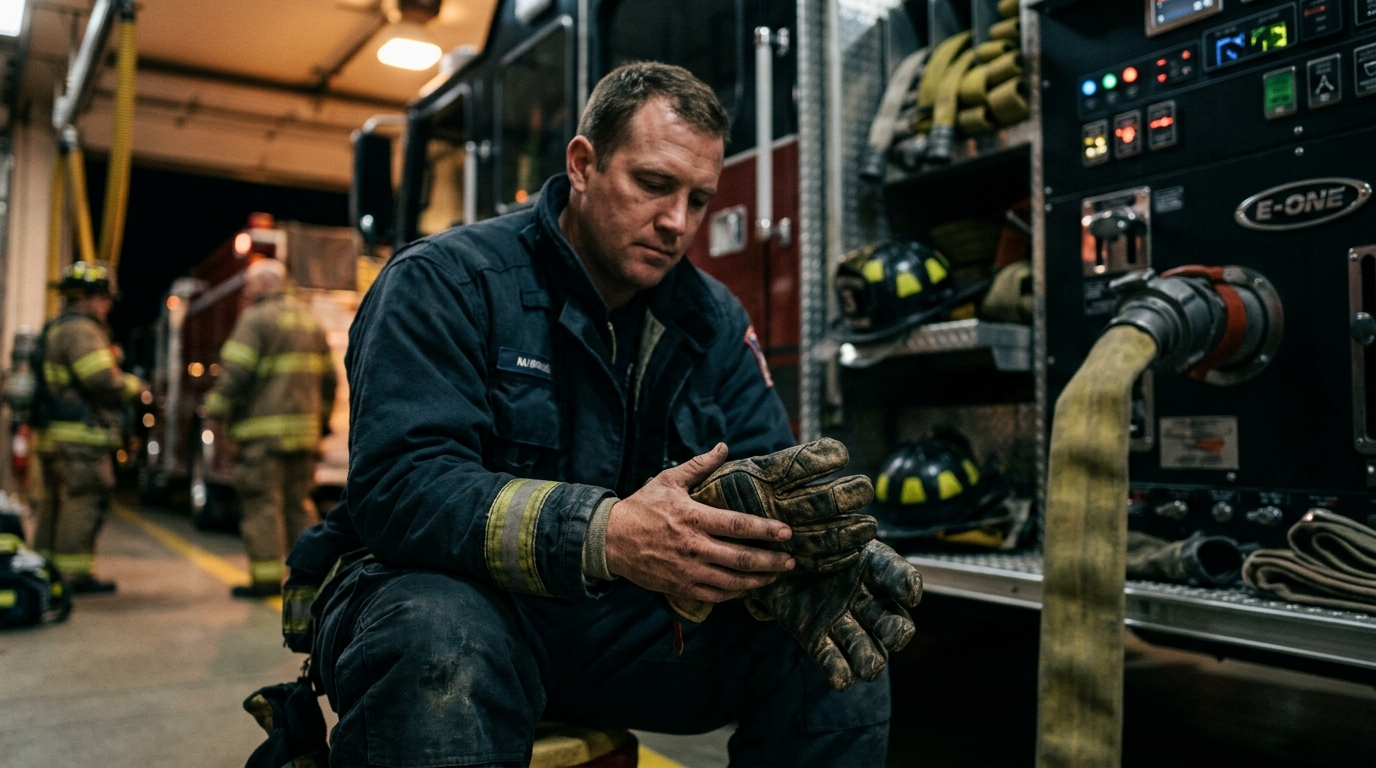
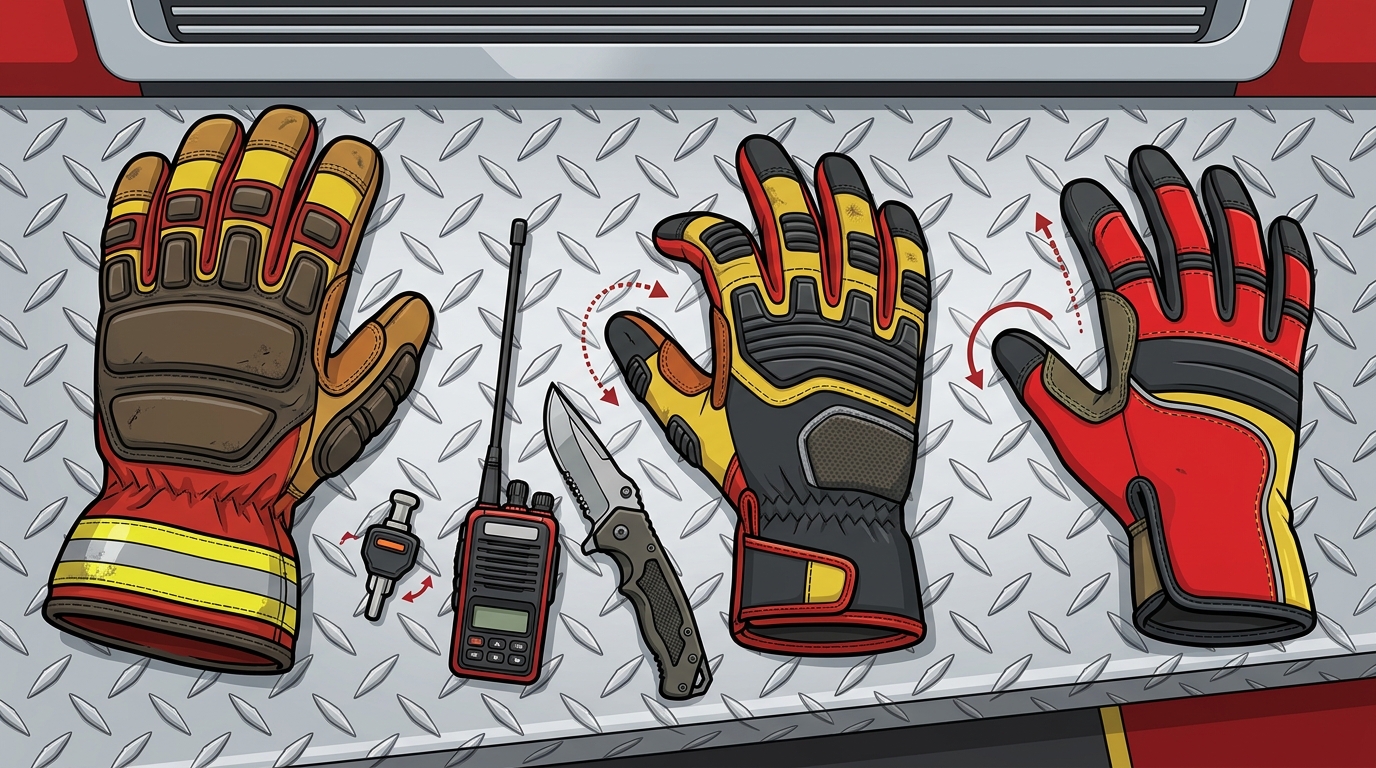
Every firefighter has struggled with bulky gloves that turn fine motor tasks into a wrestling match. Trying to toggle an SCBA regulator, key a portable radio, or open a rescue knife while wearing stiff, over-padded gloves is more than inconvenient—it is a safety hazard that leads some crews to remove hand protection entirely inside the hazard zone. This comparison breaks down how leading manufacturers balance thermal shielding with finger control so you can choose confidently.
The Core Trade-Off Every Firefighter Faces
Glove manufacturers universally acknowledge that balancing dexterity with thermal protection is one of the hardest engineering challenges in PPE design. Thicker insulation traps more air and resists heat transfer, but it also restricts finger movement. The ideal glove threads the needle between these two demands.
What NFPA 1971 Requires From Your Gloves
Before comparing specific products, it helps to understand the baseline every certified glove must clear. NFPA 1971 establishes minimum levels of protection from thermal, physical, environmental, and bloodborne pathogen hazards encountered during structural firefighting. The 2018 edition introduced three major updates relevant to dexterity and protection:
- Moisture barrier upgrade: The barrier must resist liquid-borne and blood-borne pathogens and prevent virus passage for at least one hour.
- Back-of-hand thermal protection: Increased requirements address the area where firefighters are most commonly burned—the back of the hand while gripping a tool or hoseline under radiant heat.
- Objective sizing system: Manufacturers must follow a measurement-based sizing chart that plots index-finger length against hand width, replacing vague S/M/L/XL labels.
Five Gloves Compared Head to Head
The table below evaluates five widely available structural gloves on the criteria that matter most when dexterity is a priority.
| Glove | Shell Material | Dexterity Highlights | TPP Rating | Certification |
|---|---|---|---|---|
| HexArmor FireArmor SR-X 8180 | Premium cow suede | Form-fitted fingers, extended gauntlet cuff, Kevlar liner for cut protection | 60+ | NFPA 1971:2018 |
| Fire-Dex Dex-Pro | 3 oz silicone-treated top grain cowhide | 3D design, seamless fingertips, keystone thumb for 360° range of motion | 60+ | NFPA 1970 |
| Pro-Tech 8 Fusion | 100% goatskin | Stitched palms that cave in rather than wrinkle; pull tab for easy donning | Meets NFPA min | NFPA 1971:2018 |
| LION Victory | Leather outer shell | True 3D continuous pattern, Kontour thumb, individual finger sidewalls | Meets NFPA min | NFPA 1971:2018 |
| MES Flame | All-fabric aramid & carbon | No leather stiffening in cold; releases heat quickly away from radiant source | 2× NFPA min (back of hand) | NFPA 1971:2018 |
Detailed Breakdown by Glove
HexArmor FireArmor SR-X 8180
The SR-X was designed with direct firefighter input across multiple live-burn training sessions. Its cow suede shell resists abrasion while form-fitted fingers and a Kevlar liner deliver both cut protection and improved finger articulation. The H2X+ FR moisture barrier provides 360-degree liquid resistance. Firefighters who have tested the SR-X report outstanding wet-condition performance—the glove does not balloon or go limp after water exposure, which is a common complaint with other models.
Fire-Dex Dex-Pro
The Dex-Pro uses a proprietary silicone-treated cowhide that stays soft through repeated wet-and-dry cycles instead of stiffening over time. Its three-dimensional finger design with naturally bent fingers and seamless fingertips reduces bunching and hand fatigue. A Porelle breathable polyurethane moisture barrier keeps the stack-up thin and flexible. With a TPP above 60, the Dex-Pro offers nearly four times the NFPA-required heat protection—proof that high dexterity and high thermal ratings are not mutually exclusive.
Pro-Tech 8 Fusion
This is the only widely available structural glove built from 100 percent goatskin. Goatskin is naturally more flexible and has higher tensile strength than cowhide, giving the Fusion a dexterity edge right out of the box. The palm is stitched so it collapses inward when you grip rather than wrinkling—an engineering detail that improves tactile feedback significantly. Reinforced knuckles and an internal Kevlar layer address the cut-resistance concerns that sometimes accompany thinner, more flexible shells.
LION Victory
The Victory addresses the dexterity problem through geometry rather than thinner materials. Its continuous 3D pattern includes a proprietary Kontour thumb and individual sidewalls in each finger that allow independent movement without fighting adjacent material. This design gives firefighters more control when operating SCBA modules and portable radios—the exact tasks cited as reasons for removing gloves on the fireground.
MES Flame
The Flame breaks from convention as the first non-leather, all-fabric structural glove certified to NFPA 1971:2018. Its aramid-and-carbon construction avoids the cold-weather stiffening that plagues leather gloves in northern climates. The back of the glove provides over twice the minimum required radiant heat protection, and the fabric releases stored heat faster than leather when turned away from a heat source—a meaningful comfort advantage during extended operations.
How to Choose: A Decision Framework
Rather than declaring a single winner, use the following criteria to match a glove to your operational profile:
- Climate: If you operate in cold or wet conditions regularly, all-fabric or silicone-treated leather will resist stiffening better than untreated cowhide.
- Primary task profile: If your role involves frequent fine-motor work (technical rescue, EMS crossover, hazmat support), prioritize goatskin or 3D-patterned gloves.
- Durability requirements: Heavy urban departments cycling through gloves quickly may favor reinforced cowhide for abrasion resistance over the softer goatskin.
- Sizing precision: Measure your hand using the NFPA 1971 method—index-finger length and hand circumference—before ordering. An improperly sized glove negates every dexterity feature the manufacturer built in.
Why Proper Fit Matters More Than Brand
Fit errors are the single biggest destroyer of glove dexterity. A glove that is too tight compresses the thermal barrier, reducing trapped air and lowering insulation from heat. This can actually increase the risk of heat transmission to the hand. On the other hand, gloves that are too loose decrease a firefighter's dexterity and are frequently cited as the reason crews remove hand protection inside the hazard zone. The 2018 NFPA sizing update exists precisely to address this problem, giving departments an objective tool to assign correct sizes.
Care Tips to Preserve Dexterity Over Time
- Wash correctly: Use detergents with a pH between 6.0 and 10.5. Never use chlorine bleach—even small amounts will seriously reduce protective qualities.
- Dry properly: Air dry or tumble dry on cool air only. High heat damages moisture barriers and stiffens leather.
- Inspect after chemical exposure: Follow NFPA 1851 inspection guidelines any time gloves contact hazardous substances. Combustion byproducts—hydrocarbons, heavy metals, acids—can embed in fibers and compromise both protection and flexibility.
- Rotate pairs: Keeping a second set allows thorough drying between shifts, preventing the moisture-related stiffening that kills dexterity.
Key Takeaways
- Every structural glove on your shortlist must be independently certified to NFPA 1971:2018 (or the consolidated NFPA 1970). Never compromise on this baseline.
- High dexterity and high thermal protection are no longer mutually exclusive—gloves like the Fire-Dex Dex-Pro deliver 60+ TPP with 3D finger articulation.
- Goatskin shells (Pro-Tech 8) offer superior flexibility; all-fabric shells (MES Flame) solve cold-weather stiffness; cow suede with form-fit patterns (HexArmor SR-X) balances durability and feel.
- Correct sizing per NFPA 1971 measurement charts is the single most impactful dexterity upgrade you can make—more important than switching brands.
- Proper washing, drying, and rotation keep a dexterous glove dexterous across its service life.
Frequently Asked Questions
What NFPA standard applies to structural firefighting gloves?
NFPA 1971 (now consolidated under NFPA 1970) specifies the minimum design, performance, testing, and certification requirements for structural firefighting protective ensembles, including gloves. It covers thermal protection, moisture barriers, cut and puncture resistance, grip, and sizing.
Why do firefighters remove their gloves on the fireground?
The most frequently cited reason is lack of dexterity. Firefighters report being unable to operate portable radio controls or SCBA modules with bulky or ill-fitting gloves, leading them to remove hand protection inside the hazard zone—a dangerous practice that proper glove selection can prevent.
Does a tighter glove always mean better dexterity?
No. While a snug fit improves finger control, a glove that is too tight compresses the thermal barrier. This reduces the trapped air that provides insulation and can actually increase heat transmission to the hand. The NFPA 1971 sizing chart helps you find the correct balance.
What is a TPP rating?
Thermal Protective Performance (TPP) measures how well a material system shields against combined convective and radiant heat exposure. A higher number means more seconds of protection before a second-degree burn occurs. Leading structural gloves now achieve TPP ratings above 60—nearly four times the NFPA minimum.
Are all-fabric gloves as protective as leather structural gloves?
Yes, provided they carry NFPA 1971:2018 certification. The MES Flame, for example, is the first all-fabric glove to earn that certification and delivers over twice the minimum required radiant heat protection on the back of the hand, while avoiding the cold-weather stiffening common with leather.