
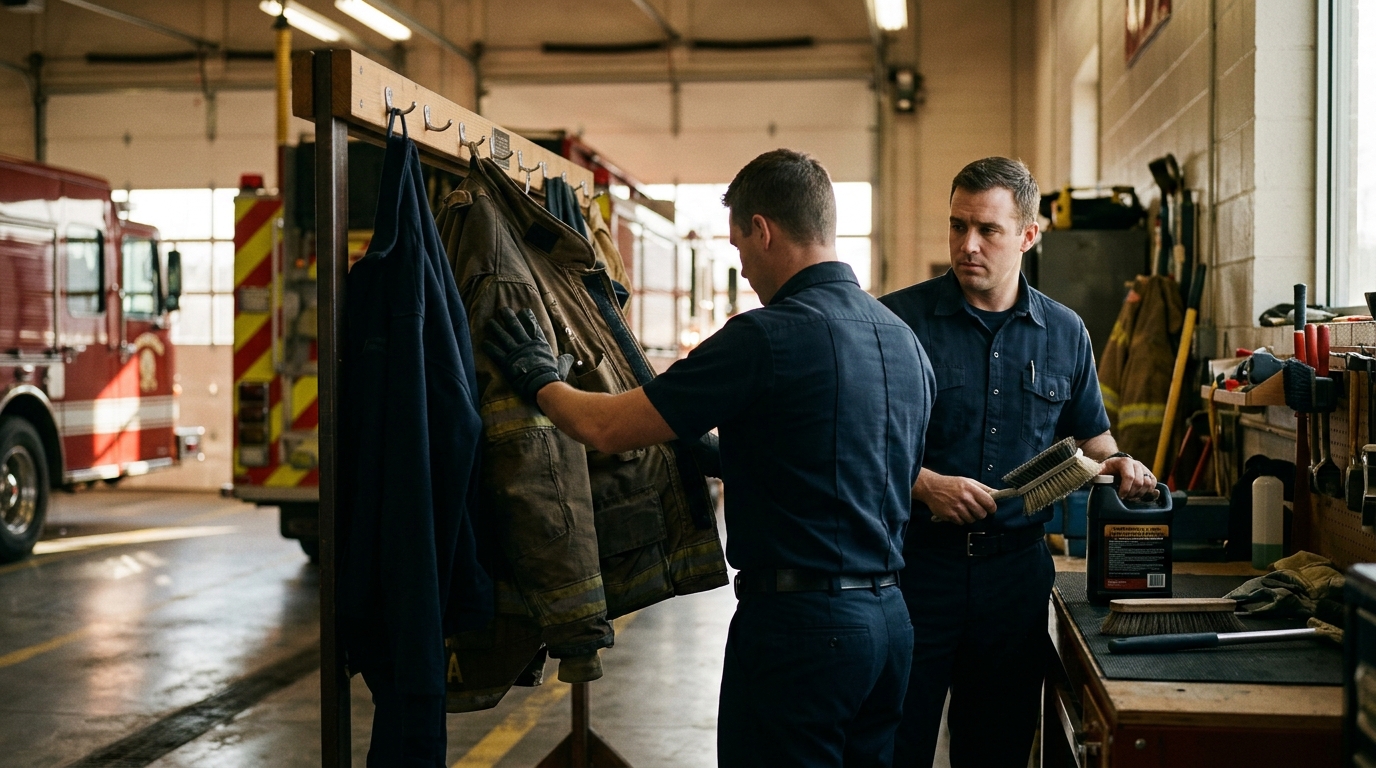
Sourcing fire rescue apparel and apparatus cleaning products made in America isn't just about patriotism—it's about accountability, quality control, and keeping the supply chain close to the people whose lives depend on the gear. This ultimate guide breaks down the leading domestic manufacturers, the cleaning standards your department needs to meet, and how to evaluate products before you buy.
Why American-Made Matters for Fire Service Gear
When protective equipment fails, the consequences are measured in burns, cancer diagnoses, and line-of-duty deaths. Domestic manufacturing shortens feedback loops between the fireground and the factory floor. Smaller, U.S.-based production facilities can enforce tighter quality checks on every stitch and seam—a detail that matters enormously when end users trust these products with their lives.
Buying American also supports the communities firefighters serve. Several firefighter-owned companies reinvest revenue into scholarships, cancer research, and first-responder support programs, creating a virtuous cycle between manufacturer and customer.
Top Sources for American-Made Fire Rescue Apparel
1. Chief Miller Apparel — One-Stop First Responder Outfitter
Chief Miller Apparel stocks an expansive catalog spanning structural gear, wildland equipment, gloves, helmets, hoods, boots, clothing, decon products, and apparatus cleaning solutions. The store carries trusted brands such as Vanguard Gloves, Bullard, Phenix Fire Helmets, Majestic Fire, and FLAME Natural Decon Soap. Chief Miller also offers a dedicated Vehicle Wash & Cleaning collection and a Decon section with gear-safe cleaning products.
2. CrewBoss PPE — Wildland and Structural Turnouts
CrewBoss manufactures high-quality fire-resistant PPE for wildland and structural firefighters, and the entire line is proudly made in the USA. Their product range includes wildland pants and jackets, station wear meeting NFPA 1975 certification, technical rescue garments, and structural turnout gear. CrewBoss is also an approved supplier of CAL FIRE's single-layer wildland pants.
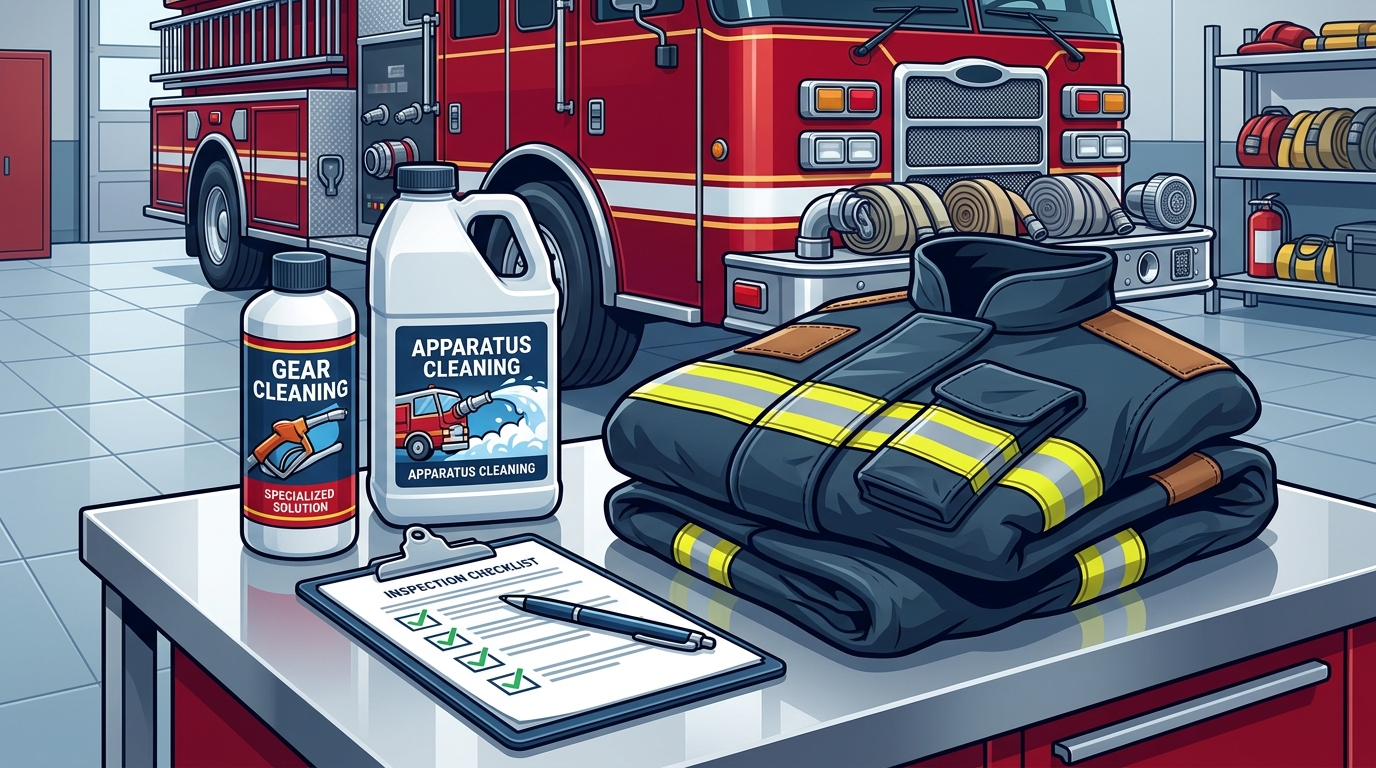
3. Cascade Fire Equipment — Pacific Northwest Heritage
Located in Oregon, Cascade Fire Equipment has been protecting American firefighters for over 40 years with products proudly manufactured in the USA. They supply everything from NFPA-certified protective clothing to hoses, nozzles, and slip-on units—serving volunteer departments, large urban agencies, and federal crews alike.
4. LION Apparel — Innovation-Driven Turnout Systems
LION offers more models and styles of turnouts, boots, helmets, and firefighter accessories than any other company in the industry. Their lineup includes ergonomically designed turnout patterns, moisture management technologies like IsoDri and SemperDri, the RedZone Particulate Hood, and a comprehensive TotalCare program for PPE cleaning, inspection, and repair.
5. Tyndale USA — Flame-Resistant Workwear
Tyndale manufactures its own line of arc-rated and flame-resistant garments in the United States. All Tyndale-made garments feature external labeling identifying their arc rating and corresponding PPE Category as defined by NFPA 70E, making compliance verification straightforward in the field.
6. Specialty FR Brands — DragonWear, National Safety Apparel, DRIFIRE
For base layers, hoods, beanies, and accessories, brands like DragonWear, National Safety Apparel (NSA), and DRIFIRE produce inherently flame-resistant items domestically. These products meet standards including ASTM F1506, NFPA 70E, and NFPA 2112.
Premium Apparatus Cleaning Solutions Made in America
Keeping apparatus clean is no longer purely cosmetic. Fire truck decontamination reduces lingering carcinogen exposure and cross-contamination risk inside the cab, the station, and on firefighters themselves. Here are the top U.S.-made cleaning brands serving the fire service.
FireSudz — Firefighter-Owned Apparatus Wash
FireSudz is a firefighter-owned company specializing in premium, American-made fire apparatus wash products. Their pH-neutral, high-foam formula lifts dirt, grime, and contaminants while protecting vehicle finishes. The product line includes an all-purpose apparatus wash, water spot remover, spray wax with UV protection, tire shine, and glass cleaner. A portion of proceeds supports scholarships for high school graduates pursuing first-responder careers.
Decon Ready™ by Ready Rack
Ready Rack's Decon Ready line includes a PPE & Multi-Surface Cleaner that meets and exceeds NFPA 1850 standards for cleaning turnout gear—and is also safe for apparatus, helmets, and SCBA. Their PPE Laundry Detergent exceeds NFPA 1850 Advanced Cleaning Characteristics by reducing carcinogenic compounds including VOCs, PAHs, and heavy metals. The line also features a skin cleanser free of trisodium phosphates.
Hygenall — Full-Spectrum Decontamination
Hygenall's patented electrostatic displacement technology removes 99% of heavy metals including hexavalent chromium, cadmium, lead, arsenic, and mercury from skin and surfaces. Their product line includes on-scene DeconKits, PPE laundry detergent that has passed the NFPA 1851 test, and individually wrapped decontamination wipes made from natural, environmentally friendly ingredients.
FLAME Natural Decon Soap
Available through Chief Miller's FLAME Natural Decon Soap Collection, this line provides firefighters with natural decontamination soap options formulated specifically for post-incident skin cleaning.
Understanding the Standards: NFPA 1850 and NFPA 1851
Any cleaning product you choose for turnout gear should reference compliance with current NFPA standards. NFPA 1850 (which consolidated and updated NFPA 1851) establishes requirements for the selection, care, and maintenance of structural and proximity firefighting protective ensembles. Key considerations include:
- pH-specific formulas: Turnout gear detergents must clean without leaving residues that degrade moisture barriers or thermal liners.
- Carcinogen removal: Advanced cleaning characteristics now require demonstrated reduction of VOCs, PAHs, and heavy metals.
- ISP certification: Independent Service Providers must be UL-verified to clean, inspect, and repair PPE under NFPA 1850.
- Material compatibility: Cleaning agents must not adversely impact the outer shell, moisture barrier, or thermal liner after multiple wash cycles.
Apparatus Decontamination Best Practices
Fire truck decontamination goes beyond a soap-and-water wash of the exterior. Pierce Manufacturing outlines that the goal is to minimize lingering carcinogen exposure and the risk of cross-contamination within the cab, facilities, or directly with personnel. Key best practices include:
- Gross decon on scene: Rinse gear and equipment at the incident before loading into apparatus. Some trucks can be outfitted with warm-water rinse outlets for this purpose.
- Separate contaminated gear: Never place soiled turnout gear inside the cab. Store SCBAs and dirty gear in external compartments.
- Clean the cab interior: Wipe down all surfaces at shift change or after every call. Use cleaners rated for the materials in your apparatus.
- Exterior wash routine: Implement a regular wash schedule using a pH-neutral apparatus wash to prevent buildup of road salt, soot, and chemical residues.
- Air quality management: Consider air decontamination systems for apparatus bays to capture off-gassing VOCs and diesel particulates.
How to Evaluate a Fire Rescue Apparel Supplier
Not every retailer with a flag on the website actually sells American-made goods. Use this checklist when vetting suppliers:
- Verify manufacturing origin: Look for specific factory locations, not vague “designed in the USA” language.
- Check NFPA certifications: Structural gear should meet NFPA 1971/1970, station wear NFPA 1975, and wildland gear NFPA 1977.
- Assess product breadth: A supplier like Chief Miller that stocks everything from gloves to gear dryers and decon products reduces procurement complexity.
- Look for field-tested brands: Companies founded by active or retired firefighters understand real-world demands.
- Review return and warranty policies: American-made gear often carries stronger warranty backing due to domestic accountability.
Key Takeaways
- American-made fire rescue apparel from companies like CrewBoss, LION, Cascade Fire, and Tyndale USA offers tighter quality control and domestic accountability.
- Chief Miller Apparel consolidates hundreds of fire service products—including apparel, cleaning solutions, and decon supplies—from trusted brands in one online store.
- Apparatus cleaning products from FireSudz, Decon Ready, and Hygenall are specifically formulated to meet NFPA standards while removing carcinogenic contaminants.
- Always verify NFPA compliance (1850, 1971/1970, 1975, 1977) before purchasing any PPE or cleaning product.
- Apparatus decontamination is a health and safety imperative—not just a cosmetic routine.
Frequently Asked Questions
What makes American-made fire rescue apparel different from imported alternatives?
Domestic manufacturers operate under stricter labor and quality regulations, offer faster turnaround on warranty claims, and often employ firefighters or former first responders in their design process. Smaller U.S. production facilities also enable more rigorous quality control—critical when products are trusted with lives.
Where can I buy both fire rescue apparel and apparatus cleaning products in one place?
Chief Miller Apparel at chiefmillerapparel.com carries an extensive range of fire rescue apparel, structural gear, decon products, and apparatus wash and cleaning solutions. Their catalog includes brands like Vanguard, Bullard, FLAME Natural Decon Soap, and dedicated vehicle wash collections.
What NFPA standard governs turnout gear cleaning?
NFPA 1850 (which updated and consolidated the former NFPA 1851) establishes requirements for selecting, cleaning, inspecting, and maintaining firefighting protective ensembles. Look for cleaning products that meet or exceed NFPA 1850 Advanced Cleaning Characteristics, which require demonstrated reduction of VOCs, PAHs, and heavy metals.
Is FireSudz a legitimate firefighter-owned company?
Yes. FireSudz is a firefighter-owned company that produces premium, American-made fire apparatus wash products. They donate a portion of proceeds toward scholarships for students pursuing first-responder careers.
How often should fire apparatus be washed for decontamination?
According to Pierce Manufacturing, fire truck washing for decontamination purposes may happen after every call, at shift change, or once a day, depending on each department's policy and call-out frequency. The key is maintaining a consistent routine that minimizes contaminant exposure.
What is the difference between apparatus wash and turnout gear detergent?
Apparatus wash products like FireSudz are pH-neutral formulas designed for vehicle paint, chrome, glass, and tires. Turnout gear detergents like Decon Ready PPE Laundry Detergent are specifically formulated to meet NFPA 1850 standards for removing carcinogens from protective fabrics without degrading moisture barriers or thermal liners. Never use a standard vehicle wash on turnout gear.