
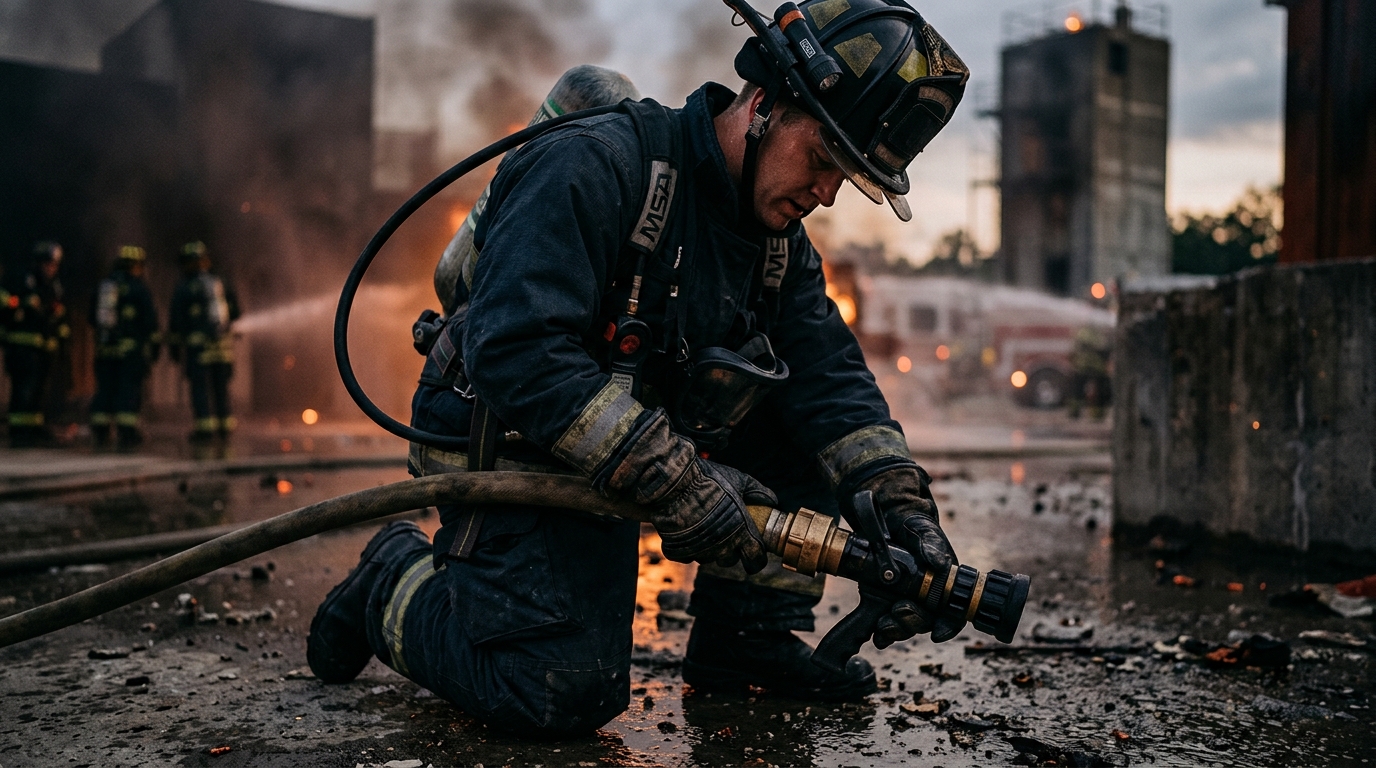
Your hands are your most important tools on the fireground. Choosing the right structural firefighting glove means finding the sweet spot between thermal protection and the finger control you need to operate SCBA regulators, pull hose, and handle rescue equipment. This guide covers NFPA standards, construction details, top-performing gloves, sizing, and care so you can make a confident choice.
Why Dexterity Matters as Much as Protection
Poor dexterity is the number-one complaint firefighters have about their structural gloves. When gloves are too bulky or stiff, personnel remove them in the hazard zone to operate portable radios or SCBA control modules — a dangerous habit that exposes bare skin to burns, cuts, and carcinogens. Glove manufacturers have spent years engineering solutions that keep finger control high without sacrificing thermal performance.
Understanding NFPA 1971 Requirements
Any glove used in structural firefighting must be independently certified to NFPA 1971: Standard on Protective Ensembles for Structural Fire Fighting and Proximity Fire Fighting. This standard establishes minimum levels of protection from thermal, physical, environmental, and blood-borne pathogen hazards encountered during structural firefighting operations. Key performance tests include flame resistance, conductive heat resistance, liquid penetration, cut and puncture resistance, hand function, and grip.
Notable 2018 Edition Changes
- Moisture barrier upgrade: The barrier must resist liquid-borne and blood-borne pathogens and block virus passage for at least one hour.
- Increased back-of-hand thermal protection: New requirements address where and how firefighters are most commonly burned — the back of the hand while clenching a tool or hoseline in radiant heat.
- Objective sizing system: Gloves are now sized by index finger length and hand width rather than generic S/M/L/XL designations, yielding numeric sizes from 64 to 82.
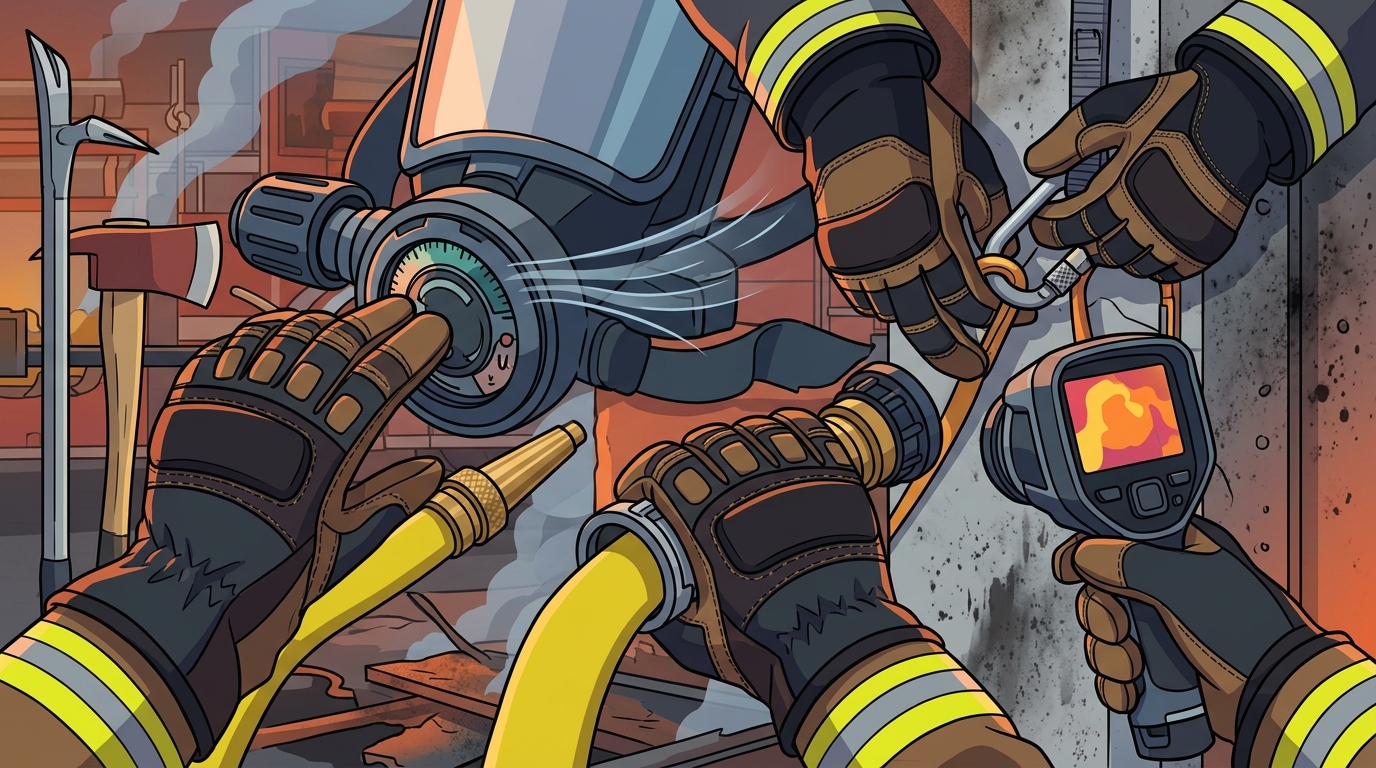
Glove Construction: The Three-Layer System
Structural gloves universally use a three-layer approach:
- Outer Shell: Typically leather (cowhide, goatskin, or pigskin) or high-performance textiles like Kevlar, Nomex, or PBI blends. The shell resists abrasion, cuts, and direct flame contact.
- Moisture Barrier: Materials such as Gore-Tex or Porelle FR prevent water, blood, and chemicals from reaching the hand while remaining breathable.
- Thermal Liner: Insulating layers — often Nomex interlock weaves or aramid quilting — trap air to protect against conductive and radiant heat.
Each additional layer adds protection but can reduce dexterity, which is why material choice, layer thickness, and seam construction are critical differentiators between brands.
Fit vs. Thermal Protection — The Critical Trade-Off
Many firefighters size down for a snug feel, believing tightness equals better finger control. In reality, a glove that is too tight compresses the thermal liner, reduces trapped air, and diminishes insulation — increasing burn risk. Conversely, gloves that are too loose slide around the hand and degrade grip. The goal is a glove that follows the natural contour of the hand with enough room for air gaps without excess material bunching at the fingertips.
Top Structural Gloves for Dexterity and Protection
1. Fire-Dex Dex-Pro
The Dex-Pro is built around a three-dimensional pattern with naturally bent fingers and seamless fingertips that reduce bunching and hand fatigue. Its thermal protection rating exceeds 60 TPP — nearly four times the NFPA minimum — making it one of the highest-rated heat-protection gloves available. The top-grain cowhide shell adds durability and gripping power in both wet and dry conditions, while a Porelle FR moisture barrier keeps weight low and flexibility high.
2. Pro-Tech 8 Fusion by TechTrade
The Pro-Tech 8 Fusion uses 100-percent goatskin leather, which is significantly more flexible and lighter than cowhide. That flexibility translates directly to better dexterity — the palm material conforms rather than wrinkling when you grip an object. A full Kevlar inner liner provides cut resistance, and an exclusive knuckle guard adds extra thermal protection on the back of the hand. A leather pull tab simplifies donning.
3. Dragon Fire Alpha X
The Alpha X features an all-natural-leather outer shell with no fabric on the exterior, providing excellent abrasion, rip, and cut resistance. Grip pads on the fingertips and thumb enhance tool handling. The gloves mold to the wearer's hand shape after a brief break-in process. They remain easy to doff even when wet or sweaty, addressing one of the biggest frustrations firefighters report.
4. HexArmor FireArmor SR-X 8180
Certified to NFPA 1971:2018, the FireArmor SR-X provides 360-degree heat and water resistance using premium cow suede. It was developed with input from active firefighters during live-burn training sessions. Users report maintaining excellent dexterity even after hours of wet evolutions — a significant advantage during extended operations.
5. LION Victory Structural Fire Glove
The Victory is a true 3-D continuous-pattern glove featuring LION's Kontour thumb and individual sidewalls in each finger. These design elements give firefighters more independent finger control, translating to a measurably higher degree of dexterity without compromising thermal protection.
6. RagTop Fire Duty Mitts
An emerging option that takes an ergonomic-first approach: fingers are sculpted to follow the natural taper from knuckle to fingertip rather than maintaining a uniform width. A reinforced Kevlar liner prevents the inner layer from pulling inside out and allows easy donning and doffing even when hands are drenched in sweat.
How to Size Your Gloves Correctly
Under the NFPA 1971 (2018) sizing system, you need two measurements:
- Hand width: Measure across the widest part of your palm, excluding the thumb.
- Index finger length: Measure from the base crease of the index finger to the fingertip.
Plot both measurements on the NFPA sizing chart to find your numeric size. Many manufacturers also offer custom sizes labeled with the closest standard size plus a "C" designation. Always try gloves on while wearing your hood and make a fist, grip a tool, and simulate radio operation before committing.
Care, Cleaning, and Knowing When to Retire Your Gloves
- Wash after exposure: Fireground combustion products — hydrocarbons, heavy metals, and soot — embed in glove fibers and can transfer to skin. Use a detergent with pH between 6.0 and 10.5.
- Never use chlorine bleach: Even small amounts of chlorine seriously degrade the protective qualities of structural gloves.
- Air dry or tumble on cool: High heat in a dryer can damage moisture barriers and thermal liners.
- Inspect per NFPA 1851: Look for charring, holes, delamination of layers, stiff or brittle leather, and compromised stitching. Retire any glove that fails inspection.
Key Takeaways
- Always verify NFPA 1971 certification before purchasing structural gloves — non-certified gloves are not appropriate for interior firefighting.
- Goatskin shells (Pro-Tech 8 Fusion) generally offer more dexterity; cowhide shells (Dex-Pro) offer more durability. Choose based on your primary role.
- Three-dimensional finger patterns and keystone thumb designs (Dex-Pro, LION Victory) dramatically improve range of motion.
- Proper sizing under the 2018 NFPA numeric system is the single most impactful thing you can do for both comfort and safety.
- A too-tight fit reduces thermal protection; a too-loose fit reduces dexterity. Find the middle ground.
- Clean and inspect gloves regularly to maintain protective performance over their service life.
Frequently Asked Questions
What is the NFPA 1971 standard for firefighting gloves?
NFPA 1971 specifies minimum requirements for the design, performance, testing, and certification of protective ensembles — including gloves — used by firefighters in structural and proximity firefighting. It covers thermal protection, cut and puncture resistance, moisture barriers, and sizing.
Can I use extrication gloves for structural firefighting?
No. Extrication or rescue gloves protect against cuts, punctures, and bodily fluids but lack the thermal protection required for interior fire attack. Only gloves certified to NFPA 1971 should be used in structural firefighting environments.
Which leather offers the best dexterity in a structural glove?
Goatskin is widely regarded as the most flexible leather used in structural gloves, which is why models like the Pro-Tech 8 Fusion choose it over cowhide or pigskin. Goatskin is lighter and conforms more naturally to hand movements while still providing strong tensile strength.
How do I measure my hand for the NFPA numeric sizing system?
Measure the width of your palm at its widest point (excluding the thumb) and the length of your index finger from its base crease to its tip. Use the NFPA 1971 sizing chart to plot both measurements and determine your numeric size, which ranges from 64 to 82.
How often should I replace structural firefighting gloves?
There is no fixed calendar replacement interval. Inspect gloves in accordance with NFPA 1851 after every exposure and at routine intervals. Replace immediately if you find charring, holes, delamination, stiff or cracked leather, or failed stitching.
Why do firefighters remove their gloves in the hazard zone?
Usually because poor dexterity makes it difficult to operate SCBA controls or portable radios. This is a dangerous practice that exposes hands to burns and carcinogens. The solution is choosing a properly sized, high-dexterity glove — not removing PPE.