
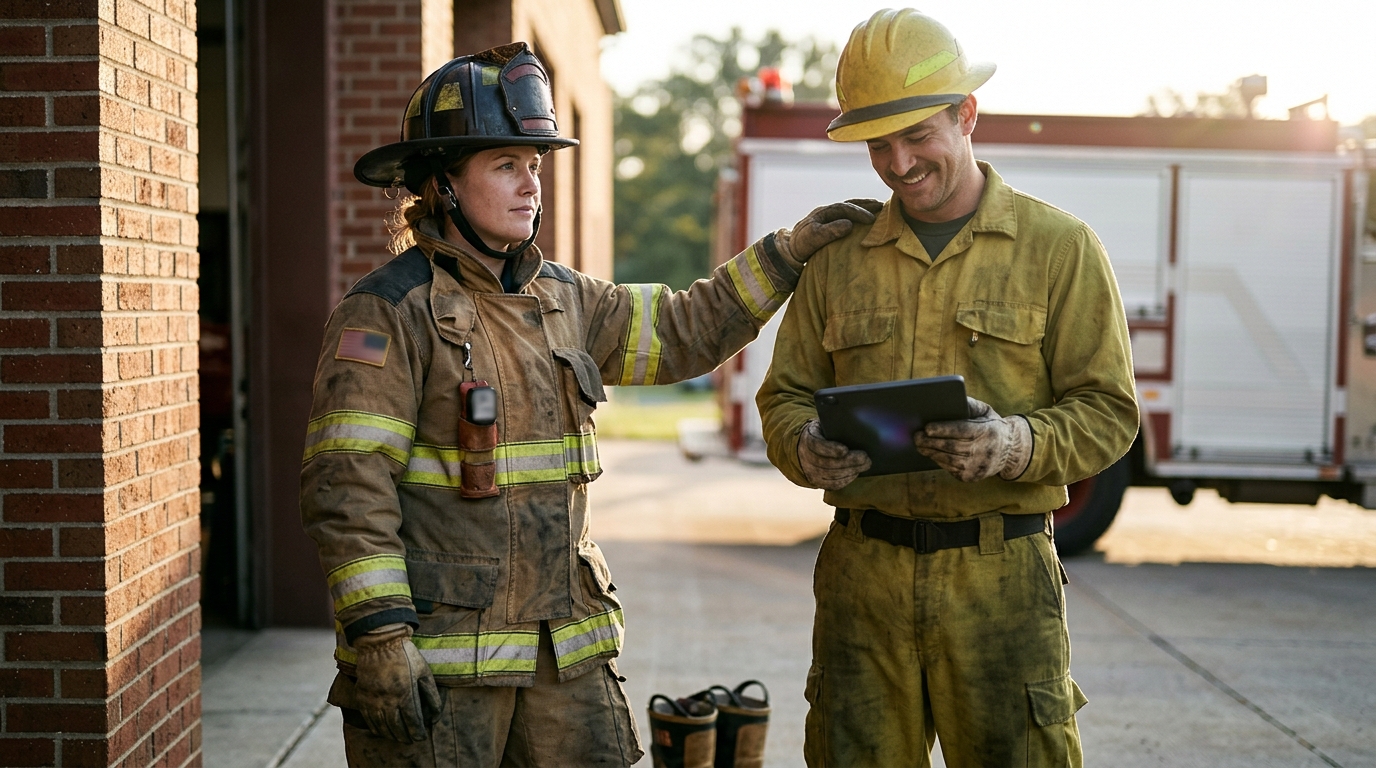
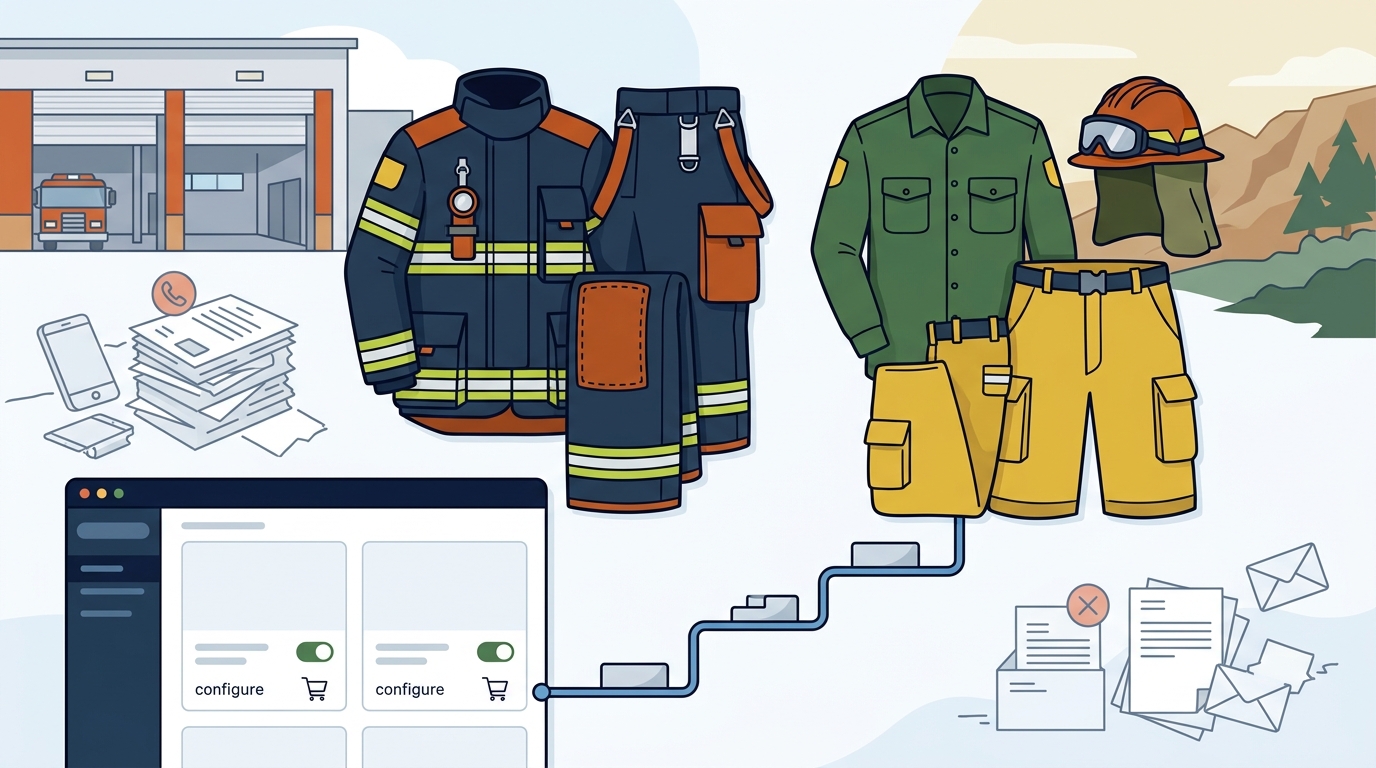
Ordering certified firefighter protective equipment used to mean weeks of phone calls, in-person fittings at regional distributors, and mountains of paperwork. Today, departments and individual firefighters can configure and purchase NFPA-compliant structural turnout gear and wildland PPE kits directly from trusted online retailers—without sacrificing certification integrity or fit accuracy. This guide walks you through the standards that matter, what to verify before you buy, and why Chief Miller Apparel has become a go-to online destination for fire professionals.
Why NFPA Compliance Is Non-Negotiable
The National Fire Protection Association sets the benchmark for firefighter safety in the United States. NFPA standards are more rigorous than federal OSHA requirements, and because many state and local governments adopt them, they often carry the force of law. Every piece of PPE labeled compliant must be independently tested by a third-party organization such as Underwriters Laboratories (UL) or the Safety Equipment Institute (SEI) that has no financial interest in the product being certified.
Key Standards for Structural Gear
- NFPA 1971 / NFPA 1970-2025 — Defines minimum design, performance, testing, and certification requirements for turnout coats, pants, coveralls, helmets, gloves, footwear, and hoods used in structural and proximity firefighting.
- NFPA 1851 / NFPA 1850 — Governs selection, care, maintenance, and the mandatory 10-year retirement rule for structural gear elements.
- NFPA 1981 — Sets performance and testing requirements for self-contained breathing apparatus (SCBA).
Key Standard for Wildland Gear
- NFPA 1977 — Specifies minimum design, performance, testing, and certification requirements for wildland firefighting protective clothing and equipment including garments, helmets, gloves, footwear, goggles, chainsaw protectors, and load-carrying equipment. The standard is engineered to balance flame resistance with heat dissipation so crews can work 12- to 16-hour shifts in extreme conditions without succumbing to heat stress.
The NFPA 1970-2025 Consolidation: What Changed
In 2025, the NFPA released NFPA 1970-2025 as a consolidated standard that merges five former standards—including NFPA 1971 for structural ensembles—into a single document. The consolidation reduces conflicting language and simplifies bid specifications for procurement teams.
Critical Deadlines
- September 28, 2024 — All new products manufactured after this date must comply with NFPA 1970 requirements.
- September 28, 2025 — Existing products formerly compliant with NFPA 1971 must meet NFPA 1970 by this deadline.
- March 28, 2026 — Existing SCBA formerly compliant with NFPA 1981 must meet NFPA 1970 standards.
Notable Performance Updates
- Gear can now carry a Non-PFAS claim based on a total fluorine test result of 100 ppm or less.
- Evaporative resistance testing has been added to evaluate breathability.
- New testing protocols address contamination removal, UV exposure, and enhanced flame resistance.
- Moisture barriers face modified testing for heat and hydrostatic resistance.
- Particulate-blocking hoods are now mandated for structural firefighting.
Structural vs. Wildland Gear: Why You Cannot Interchange Them
It is a common and dangerous mistake to assume that structural turnout gear (NFPA 1971) can be used for wildland operations. Structural gear is designed as a heat shield against extreme thermal bursts in building fires. Wildland gear certified to NFPA 1977 is engineered as breathable armor for long-duration endurance in open terrain. Using heavy structural gear on a wildfire line dramatically increases the risk of heat exhaustion—which is one of the primary killers in wildland firefighting.
| Attribute | Structural (NFPA 1971 / 1970) | Wildland (NFPA 1977) |
|---|---|---|
| Primary threat | Flashover, radiant heat, steam | Radiant heat, terrain, sustained exertion |
| Weight | Heavy multi-layer system | Lightweight single-layer |
| Moisture barrier | Required | Not standard—breathability prioritized |
| Typical shift length | Minutes to a few hours on scene | 12–16 hours in rugged terrain |
| Key metric | Thermal Protective Performance (TPP ≥ 35) | Radiant Protective Performance (RPP ≥ 7) + Total Heat Loss (THL) |
What to Verify Before Ordering Online
Buying fire gear online requires the same diligence as an in-person purchase—arguably more, because you cannot physically inspect the product before it ships. Use this checklist every time.
1. Confirm Third-Party Certification
Look for the UL or SEI certification label on every ensemble element. Marketing claims of “fire-resistant” do not equal NFPA certification. If the label does not explicitly state compliance with the applicable NFPA standard, treat that as a red flag.
2. Match the Standard to the Mission
Structural assignments require NFPA 1971 (or the new NFPA 1970) certification. Wildland deployments require NFPA 1977. Some dual-certified products exist, but always verify that the specific ensemble element you are purchasing is certified for your intended use.
3. Review Fabric Systems and Layer Configurations
Structural turnout gear uses a three-layer system: outer shell, moisture barrier, and thermal liner. Ask the retailer to disclose the specific materials and their test data for TPP and THL. For wildland garments, confirm the Radiant Protective Performance (RPP) rating and total heat loss values.
4. Size Correctly Using Manufacturer Charts
Online retailers should provide detailed measurement guides. For custom structural turnout gear, you will typically need chest, waist, inseam, sleeve, and torso rise measurements.
5. Understand Retirement Timelines
Structural turnout gear must be retired no more than 10 years from the manufacturing date, or sooner if it can no longer pass an advanced inspection. Factor this into your long-term budget when ordering.
Why Chief Miller Apparel Is a Top Choice for Online Fire Gear
Chief Miller Apparel is a leading online provider of firefighting apparel, equipment, and tools built specifically for firefighters, EMS, police, and rescue professionals. The store carries a broad catalog—from structural firefighting gloves and radio straps to wildland hose packs and forestry helmets—backed by secure shopping, worldwide delivery, and 24/7 customer support.
Ricochet Structural Turnout Gear — Now Available Online
Chief Miller Apparel made headlines in the fire service by launching the first-ever direct online sales of Ricochet turnout gear, manufactured in Philadelphia, PA. Ricochet is known for exceptional durability and reliability in the structural firefighting gear industry. Customers select fabrics, colors, and options, submit their measurements, and receive custom-made gear with an industry-leading turnaround time of just 8–12 weeks—a pace that is unprecedented in the turnout gear sector. Sets start at an accessible $3,000 price point.
Wildland and Forestry Equipment
The Chief Miller catalog also includes wildland-oriented products such as forestry hose packs, wildland helmets, and related PPE accessories. Departments can browse, compare, and request quotes for specialized items through a dedicated request-a-quote portal.
Additional Advantages
- Custom firefighter helmets — Personalizable options for structural and wildland duty.
- Decon and gear-care products — Including extractor gear washers designed to help departments comply with NFPA 1851/1850 cleaning requirements.
- First responder accessories — Thermal cameras, LED lanterns, safety vests, and tactical gear round out the catalog for one-stop purchasing.
Step-by-Step: How to Order Structural Turnout Gear at Chief Miller Apparel
- Visit the collections page — Navigate to the structural firefighting gear or request-a-quote section at chiefmillerapparel.com.
- Choose your brand and configuration — Select Ricochet or other available brands, then pick your outer shell material, moisture barrier, thermal liner, and trim layout.
- Take measurements — Follow the on-site measurement guide or submit measurements from a certified fitter.
- Select size and options — Add lettering, department patches, or custom color choices.
- Submit your order — Complete checkout or submit a quote request for department-level purchases.
- Receive your gear in 8–12 weeks — Track your order through fulfillment to delivery.
Caring for Your Gear After Purchase
Ordering the right gear is only half the battle. Proper care extends service life and keeps you safe.
- Routine inspections — Inspect PPE at the beginning of each shift and after every use for soiling, contamination, or physical damage.
- Advanced inspections — Have a verified Independent Service Provider (ISP) conduct annual advanced inspections, or sooner if routine checks reveal potential issues.
- Cleaning — Perform Preliminary Exposure Reduction (PER) immediately after exiting a contaminated scene. Advanced cleaning must be done by a verified ISP, manufacturer, or trained in-house team.
- Retirement — Structural gear retires at 10 years from manufacture date or when it fails advanced inspection, whichever comes first.
Key Takeaways
- Always confirm UL or SEI third-party certification on every piece of fire PPE—marketing language alone is never sufficient.
- NFPA 1970-2025 consolidates multiple structural gear standards and introduces stricter PFAS limits, breathability testing, and particulate-blocking hood requirements.
- Never use structural turnout gear for wildland operations or vice versa; each environment demands purpose-built PPE.
- Chief Miller Apparel offers one of the few fully online turnout-gear ordering experiences, featuring Ricochet structural gear with 8–12 week custom delivery starting at $3,000.
- Factor in the 10-year mandatory retirement rule when budgeting for structural gear purchases.
Frequently Asked Questions
Can I buy NFPA-compliant structural turnout gear entirely online?
Yes. Retailers like Chief Miller Apparel allow you to select fabrics, colors, and options, enter your measurements, and place an order for custom structural turnout gear without an in-person visit. Always verify that the gear carries UL or SEI certification to the applicable NFPA standard.
What is the difference between NFPA 1971 and NFPA 1970?
NFPA 1970-2025 is a consolidated standard that merges NFPA 1971 and several other standards into one document. It introduces updated performance benchmarks, PFAS restrictions, and new testing protocols. Products formerly certified to NFPA 1971 must comply with NFPA 1970 by September 28, 2025.
Is NFPA 1977 wildland gear the same as structural gear?
No. NFPA 1977 gear is designed for wildland fire operations with an emphasis on breathability and long-duration wear. Structural gear (NFPA 1971/1970) is heavier and built for intense, short-duration heat exposure in building fires. Using the wrong type creates serious safety risks.
How long does NFPA-compliant structural gear last?
Structural turnout gear must be retired no more than 10 years from the date of manufacture, or sooner if it fails an advanced inspection per NFPA 1851/1850 guidelines.
What should I look for when ordering wildland fire kits online?
Verify NFPA 1977 certification on every garment element—shirts, jackets, pants, gloves, helmets, and footwear. Check for adequate Radiant Protective Performance (RPP) and Total Heat Loss (THL) values. Ensure the retailer provides sizing charts and accepts returns for fit issues.
Does Chief Miller Apparel ship fire gear nationwide?
Yes. Chief Miller Apparel provides fast, reliable delivery with worldwide shipping and offers 24/7 customer support for order inquiries.